Best Hiking Trails in Sardinia: The 2026 Trail Guide
Sardinia is one of the Mediterranean's great walking islands, and almost none of it looks like the beach brochures. The interior is limestone canyon country, the north is pink granite, the east coast drops into the sea in 400-metre cliffs, and the trails run past Bronze Age villages that were old when Rome was a village. This guide compares the best hiking trails in Sardinia by region, grade and access, including which ones now need a booked ticket, which ones need a guide by law, and which guided day covers each of them. Prices come from the Sardinian walking days we track, quoted in dollars with the euro equivalent at about €1 to $1.16 in August 2026.
Quick answer
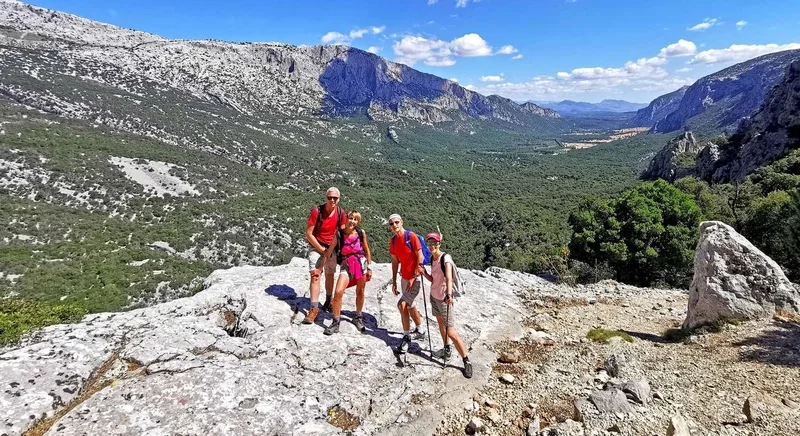
The four trails that define Sardinian walking are Gorropu, the canyon in the Supramonte with walls up to about 500 metres; Cala Coticcio on Caprera, walked only with an authorised park guide; Tiscali, a Bronze Age village inside a collapsed cave; and Cala Goloritzè on the Baunei coast, which now needs a €7 ticket booked three days ahead. Everything else on this page is chosen to sit around those four, from two-and-a-half-hour coastal walks to full days in the interior.
Key takeaways
- Gorropu is the one most people come for. Entry to the gorge is €6 for adults, paid in cash at the gate, and the trailhead logistics are covered in our guide to visiting the gorge
- The easiest way to walk it is the full-day Gorropu hike from Orosei or Dorgali, $74 (about €64) with hotel pickup and a 5.0 rating from 52 reviews
- Cala Coticcio cannot be walked alone. The park requires an authorised guide, and the Caprera Island trek at $68 (about €59) is how most visitors do it
- The Gulf of Orosei coves are now behind a booking system, explained in our coastal cove walks guide
- For an easy first walk, the Cagliari sunset trail to the lighthouse runs 2.5 hours for $57 (about €49)
- Between June and September the interior trails are a morning-only proposition, which is the whole subject of hiking here in summer
The Best Hiking Trails in Sardinia at a Glance
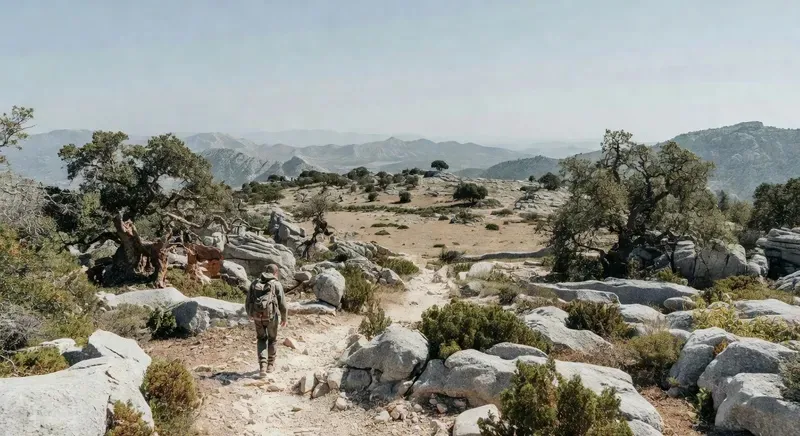
Sardinia's walking divides into four landscapes that feel like four different countries. The Supramonte canyon country in the east is dry limestone karst, holm oak and vertical rock. The La Maddalena archipelago in the north is pink granite and sea. The western parks around Porto Conte and Capo Caccia are clifftop paths with a lighthouse always somewhere in the frame. And the Gennargentu in the middle is high, empty upland that snows in winter.
The table below is the short version. Grades follow the Italian convention used on Sardinian signage: T is a tourist path, E means a walker's path with some rough ground, and EE means experienced walkers with a head for exposure. Anything above EE has rope work in it.
| Trail | Region | Grade | Ticket or booking | Time on foot |
|---|---|---|---|---|
| Gorropu from Genna 'e Silana | East, Supramonte | E | €6 at the gate, cash | 4 to 5 hours return |
| Gorropu from the Sa Barva bridge | East, Supramonte | E | €6 at the gate, cash | 4 hours return |
| Cala Coticcio, Caprera | North, La Maddalena | T to E | Authorised guide plus €3 park contribution | About 3 hours return |
| Tiscali | Central, Lanaitho valley | E | €6 full, €3 reduced, cash | 4 to 5 hours return |
| Cala Goloritzè | East, Baunei | E | €7, booked three days ahead | 3.5 hours return |
| Cala Luna from Cala Gonone | East, Dorgali | E | Access road status varies | 4 hours return |
| Capo Testa and the Valle della Luna | North, Gallura | E | Free | About 2.5 hours |
| Porto Conte and Capo Caccia | Northwest, Alghero | T | Park pass for the reserve | 2 to 3 hours |
| Sella del Diavolo, Cagliari | South | T | Free | Under 2 hours |
Two things in that table catch people out. The first is that three of the island's best-known walks now sit behind a payment or a permission, and two of those cannot be arranged at the trailhead on the morning. The second is that the grade tells you nothing about the heat, which is the real filter on this island from June onwards.
The Guided Days That Cover These Trails
Useful as a benchmark while you read: these are the walks you would otherwise be arranging yourself, with the transport, the fee and the local guide already in the price.
 from $74
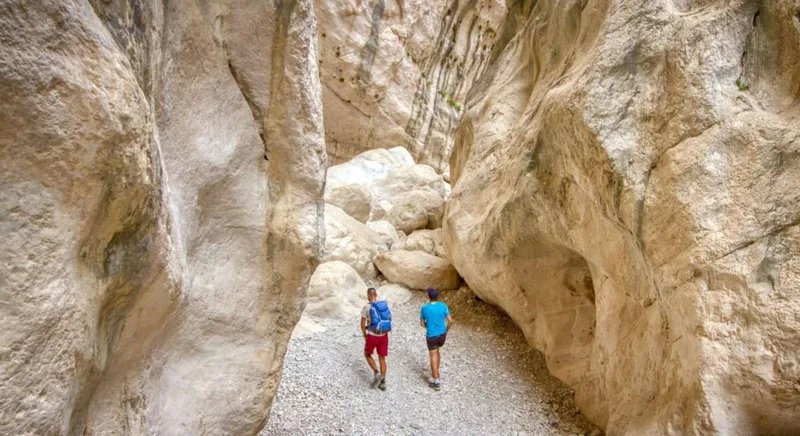
From Orosei or Dorgali: Gorropu Canyon Guided Hike
Hike into the breathtaking Gorropu canyon across the wilderness of the Supramonte — one of the finest treks in Sardinia. With convenient hotel transfers from Orosei or Dorgali…
- Hike into Gorropu — Europe's deepest canyon
- Hotel transfers from Orosei or Dorgali included
- Trek through the wild Supramonte along the Flumineddu riverbed
- Led by an expert local mountain guide
 from $68
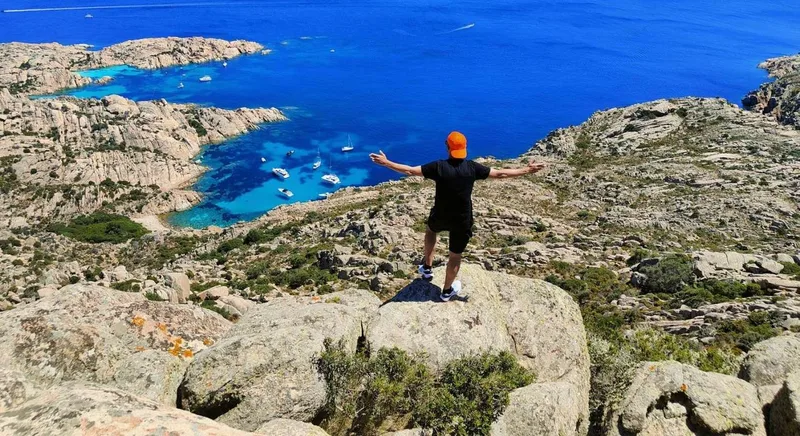
Trekking La Maddalena Archipelago — Caprera Island Hike to Cala Coticcio
The main trekking route in the La Maddalena Archipelago — hike through the pinkish granite landscapes of Caprera Island with a licensed National Park guide to reach Cala…
- La Maddalena Archipelago National Park — daily visitor numbers strictly limited
- Departs from La Maddalena area — Caprera Island via the causeway
- Snorkel in crystal-blue waters at Cala Coticcio — Sardinia's 'Tahiti'
- Park entrance ticket + Sardinian aperitif included
 from $68
Hike to Tiscali — the Nuragic Village Hidden in a Cave
Trek through the oak forests and juniper-lined slopes of the Lanaitho Valley to reach Tiscali — a 3,000-year-old Nuragic village concealed inside a collapsed limestone cavern at the…
- Tiscali — a 3,000-year-old Nuragic village inside a collapsed cave
- Hotel pickup from Orosei, Dorgali or Oliena included
- Panoramic ridge walk with sweeping Lanaitho Valley views
- Picnic lunch at the summit included
Trip Planning & Trailhead Logistics
Before you lace your boots, understand that Sardinia's best wilderness trails require careful logistical planning:
- Where to stay: Base yourself in Cala Gonone or Dorgali for the Supramonte and Gorropu canyon, or Baunei for Cala Goloritzè. See our detailed guide to where to stay in Sardinia for hiking with verified hotel bases from $88/night. - Getting to trailheads: Regional ARST buses do not run to mountain passes like Genna 'e Silana or the Golgo plateau. Read our Sardinia car rental guide for hikers to pick the right vehicle and avoid mountain road traps. - Mountain mobile coverage & GPS: Canyons have zero cell reception. Download offline GPX maps and choose an Italian network with strong mountain reach using our best eSIM for Sardinia hiking guide. - Hike in, boat back: On coastal routes to Cala Luna, you can hike one way and take a boat taxi back to port — explore our Gulf of Orosei boat tours and hiking transfers guide.
Gorropu, the Canyon Everyone Comes For
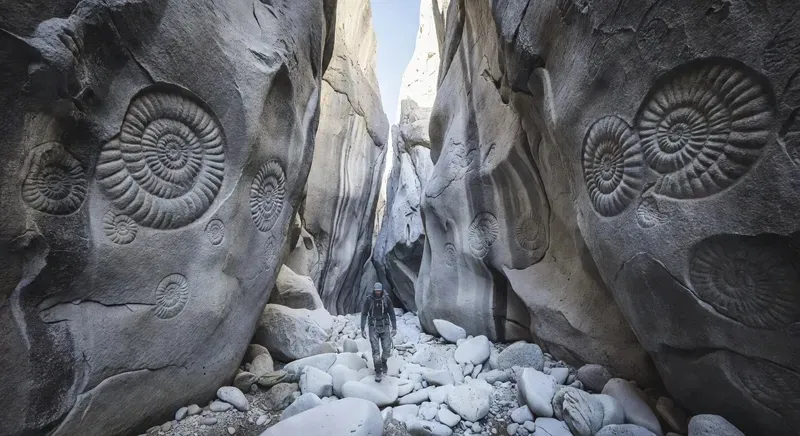
Su Gorropu is the walk every visiting hiker has heard of. The Rio Flumineddu cut it through Jurassic limestone in the wild centre of the Supramonte, and the walls rise up to about 500 metres. It is the deepest canyon in Italy and one of the deepest in Europe, though the more honest distinction is its shape: in places the gorge narrows to a few metres while the rock still climbs hundreds of metres overhead. Inside, the noise of the outside world simply stops, and the limestone is full of marine fossils from a time when all of this was seabed.
There are three ways in and they are not equivalent. From the Genna 'e Silana pass on the SS125 the path drops about 650 metres in four kilometres, which is a pleasant descent and a long climb back. From the Sa Barva bridge above Dorgali the walk is longer but almost flat, following the riverbed. The third approach comes from the Urzulei side, which is the route the concessionaire's off-road transfers use. Entry to the gorge itself costs €6 for adults and €4 for children aged 6 to 17, paid in cash at the ticket office by the entrance, and the canyon has to be cleared by 17:00. Last verified: August 2026, and all of it is set out in our guide to visiting the gorge.
Two guided days on this site cover it. The full-day trek from Orosei or Dorgali runs 8 hours with hotel pickup for $74 (about €64), and the shorter day from Cala Gonone at $95 (about €82) adds a 4x4 transfer to the trailhead and a Sardinian lunch, which turns the hardest part of the logistics into somebody else's problem.
Cala Coticcio, the Walk to Sardinia's Tahiti
Cala Coticcio sits on the far side of Caprera in the Parco Nazionale dell'Arcipelago di La Maddalena, a small cove of turquoise water inside a wall of pink granite. It has been called Sardinia's Tahiti since long before anyone photographed it for the internet, and it can only be reached on foot or from the water.
The rule that surprises visitors is that you cannot simply walk there. Cala Coticcio and neighbouring Cala Brigantina sit in the park's integral-protection zone, and access is permitted only in the company of a certified environmental guide booked in advance. Every visitor also pays a €3 park contribution, which children under 12 are exempt from. Unguided access is sanctioned under the park's rules. Last verified: August 2026.
The path itself is about 3.2 kilometres each way with around 160 metres of climb, rocky underfoot but not exposed, and the arrival at the cove after an hour and a half of granite scrambling feels earned in a way that stepping off a boat does not. Our Cala Coticcio hike guide covers the guided day, which runs $68 (about €59) and includes the snorkelling stop.
Tiscali, the Best Archaeological Walk on the Island
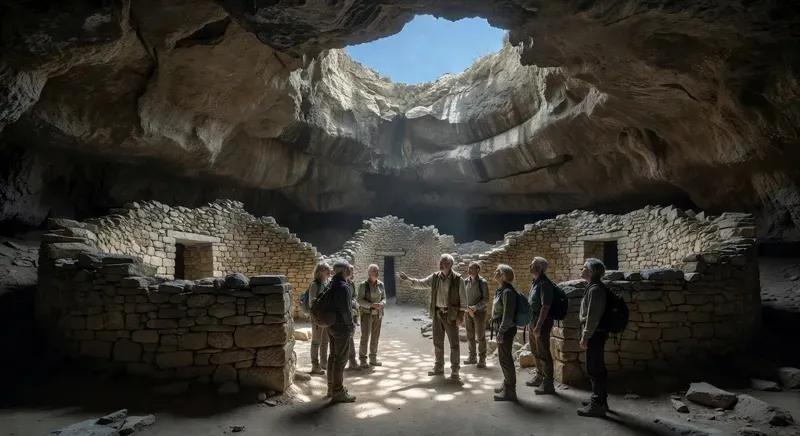
Tiscali is not like anything else in Sardinia. A Bronze Age village sits inside a vast collapsed limestone cavern on Monte Tiscali, above the Lanaitho valley, built by people who worked out that a cave roof gave them shelter, camouflage and a fortress in one. The circular stone dwellings still stand to waist height, and standing among them with the cave mouth open to the sky above is worth the climb on its own.
The approach walks through oak and juniper woodland in the valley before a steep, rough climb to the cave entrance. Entry to the site is €6 full and €3 reduced, cash only, with no card payment on site; opening hours run 9:00 to 17:00 from January to April and October to December, and 9:00 to 19:00 from May to September, under the cooperative that manages it for the Comune di Dorgali. Last verified: August 2026. The Tiscali guided hike at $68 (about €59) handles the pickup, the fee and the part where a pile of stones becomes a village you can read.
The Gulf of Orosei Coves on Foot
The stretch of coast between Baunei and Dorgali holds the most photographed water in Italy, and most of it can be walked to. Cala Goloritzè is the famous one: about 3.6 kilometres each way with roughly 500 metres of descent, an hour and a half down and two hours back up, and since the municipality capped it there is a €7 ticket per person, booked from three days before the date on the Comune di Baunei's booking platform, with 250 people allowed at a time. Boats cannot land on the beach. Last verified: August 2026.
From 20 May 2026 the same municipality brought Cala Luna, Cala Mariolu, Cala Biriola, Cala dei Gabbiani and Su Sirboni into one QR-code booking system alongside Goloritzè, which is the single biggest change to walking this coast in years. Cala Sisine is the gentlest of the group underfoot, Cala Biriola has short rock steps and suits experienced walkers, and Cala Luna is reached from Cala Gonone along the coast path from Cala Fuili, about 5.5 kilometres each way. That last one comes with a caveat: the access road to the Cala Fuili trailhead has been closed by landslide in the past, so check the Comune di Dorgali's notices before you drive out. We have put the whole system, cove by cove, in the Gulf of Orosei coast walks guide.
Capo Testa and the Valle della Luna
On the far northern tip, the Capo Testa promontory near Santa Teresa Gallura is a field of giant granite boulders wind-carved into shapes that look deliberate, dropping into blue coves with Corsica on the horizon. The walk crosses these formations and into the Valle della Luna, the amphitheatre that became Italy's best-known hippie valley in the 1970s and still has a few residents who never left.
On foot it is roughly two and a half hours at a moderate grade, with easy scrambling over the rock and enough sea breeze to make it one of the few trails here that stays comfortable in high summer. The guided version from Santa Teresa Gallura runs 6 to 7 hours including transfers, at $122 (about €105), and includes a swim stop.
The Easy Trails, and Who They Suit
Not every good walk here costs you a day and a litre of sweat. Three of the easiest are genuinely worth the time.
The donkey walk at Cargeghe north of Sassari is the gentlest, a circular route past a waterfall, prehistoric rock-cut tombs and an old lime kiln with tame donkeys along for the walk, 3.5 hours for $81 (about €70). Details are in the donkey hike guide. The Porto Conte park circuit near Alghero follows the clifftop above Cala Dragunara with the Capo Caccia lighthouse across the bay, 2.5 hours for $81 (about €70), covered in the Porto Conte trek guide. And the Cagliari sunset walk climbs from the city to the Capo Sant'Elia lighthouse in 2.5 hours for $57 (about €49), which is the cheapest way to understand why people move here.
Add two free ones the locals use. Sella del Diavolo above Calamosca beach in Cagliari is about 2.5 kilometres with 150 metres of climb, graded T, and reachable by city bus. The holm-oak forest of Is Cannoneris south of Cagliari has shaded loops of three to five kilometres, which matters more than it sounds in August. Families will find both, plus the age question, in our hiking with children guide.
- Donkey walk at Cargeghe, 3.5 hours, easy, $81 (about €70)
- Porto Conte clifftop circuit near Alghero, 2.5 hours, easy, $81 (about €70)
- Cagliari sunset walk to the lighthouse, 2.5 hours, easy, $57 (about €49)
- Sella del Diavolo, Cagliari, about 2.5 km, 150 m of climb, free
- Is Cannoneris forest loops, 3 to 5.5 km, shaded, free
The Routes We Would Talk You Out Of
The Selvaggio Blu belongs on any list of the island's great routes and on almost nobody's holiday plan. The coastal traverse from Pedra Longa to Cala Sisine covers about 40 kilometres over four classic stages, most of it unmarked, along ledges hundreds of metres above the sea, with abseils on the harder stages and no reliable water anywhere on the route. The Comune di Baunei requires parties to register in advance, charges €30 per person and caps groups at ten walkers plus a guide. If you are curious rather than committed, read what the Selvaggio Blu actually demands before you plan around it.
The same honesty applies to the deep end of Gorropu. Walking to the gorge mouth is a hike. Continuing up the canyon floor past the boulder chokes is a scramble over polished blocks the size of cars, and the upper sections are canyoning terrain with rope, not walking.
When to Walk Which Trail
April, May, September and October are the months that make this island easy. Nuoro, the closest weather station to the Supramonte trailheads, averages a high of 17°C in April and 25°C in September, and the ground is dry by late spring.
July and August are a different proposition inland. Nuoro averages 31°C in both months, and during the heatwave of July 2026 the regional environmental agency recorded 47.8°C at Uta and more than seven stations in ten passing 40°C between the 14th and the 17th. The workaround is not heroism, it is timing: start at first light, be off the exposed ground before midday, and move the walk to the coast or into forest. The trails that keep working in high summer are Capo Testa, the shaded loops of Is Cannoneris and the evening walk in Cagliari.
Winter is quietly good on the coast. Alghero and Cagliari stay walkable all year, and the Supramonte with snow on the tops is a sight few visitors ever see, though November is the wettest month in Nuoro at 115 mm and the tracks in the interior turn to mud.
| Month | Nuoro high °C | Rain mm | What it means on the trail |
|---|---|---|---|
| April | 17 | 75 | Wildflowers, cool canyon days, some mud in the interior |
| May | 22 | 50 | The best all-round month for the Supramonte |
| June | 28 | 30 | Early starts only inland, the coast still comfortable |
| July | 31 | 12 | Coast and forest, first light or evening |
| August | 31 | 15 | As July, plus the busiest cove bookings |
| September | 25 | 45 | Warm rock, warm sea, the swim-after-walk month |
| October | 21 | 60 | Quiet trails, short days, good grades everywhere |
| November | 15 | 115 | Wettest month, interior tracks turn to mud |
Best Hiking Trails in Sardinia: Questions We Get Asked
What is the best hike in Sardinia?
For most walkers it is Gorropu, the canyon in the Supramonte where the walls rise up to about 500 metres. It is Italy's deepest canyon and one of the deepest in Europe, and the approach from the Sa Barva bridge is manageable for anyone with reasonable fitness. If you would rather not deal with the unpaved access roads, the full-day guided trek from Orosei or Dorgali at $74 (about €64) includes hotel pickup.
Which Sardinian trails need a ticket or a booking?
Three of the famous ones. Gorropu charges €6 for adults and €4 for children aged 6 to 17, cash at the gate, no advance booking. Cala Goloritzè needs a €7 ticket booked from three days beforehand, with 250 people allowed at a time. Tiscali charges €6 full and €3 reduced, cash only. Cala Coticcio needs no ticket but does need an authorised guide plus a €3 park contribution. Last verified: August 2026.
Which trails in Sardinia are easy enough for a first-time walker?
The Cagliari sunset walk to the Capo Sant'Elia lighthouse, the Porto Conte clifftop circuit near Alghero and the donkey walk at Cargeghe are all short, graded easy and finished in under four hours. Sella del Diavolo above Calamosca beach is the free version and takes under two hours from the bus stop. The Cagliari sunset walk at $57 (about €49) is the gentlest introduction of the three guided ones.
How long does it take to walk into Gorropu canyon?
From the Genna 'e Silana pass, count on an hour and a half to two hours down and about two and a half hours back, since the return is a 650-metre climb. From the Sa Barva bridge it is roughly two hours each way along the riverbed with very little climbing. Both leave you at the same gorge mouth, and both need you out of the canyon by 17:00.
Can you walk the Gulf of Orosei coves without booking?
Not the main ones. Since 20 May 2026 the Comune di Baunei runs a single QR-code booking system covering Cala Goloritzè, Cala Luna, Cala Mariolu, Cala Biriola, Cala dei Gabbiani and Su Sirboni, and Goloritzè has a fixed cap of 250 people at a time. Book from three days before the date you want.
Which month has the best walking conditions in Sardinia?
May and October. Nuoro averages a high of 22°C in May and 21°C in October, the light is long, and the trails are dry without being baked. April brings the wildflowers and a little more rain, September is warmer than October but the sea is at its best for a swim after a coastal walk.