Hiking in Sardinia in Summer: Heat, Fire Season and Which Trails Still Work
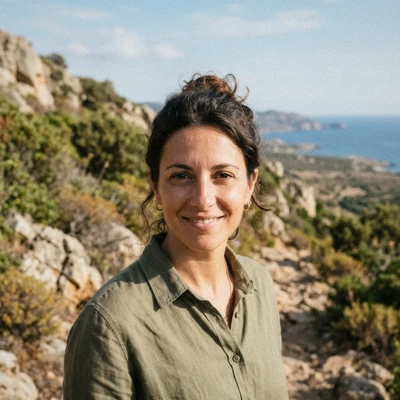
Hiking in Sardinia in summer is entirely possible in July and August, but the season asks more of you than any other stretch of the year. Nuoro's long-term averages put July and August at around 31°C with barely 12 mm of rain the whole month, and the coast runs close behind it by mid-morning. The trade-off runs the other way too: June and September are the honest shoulder months, cooler by several degrees and still dry, and the deep midday hours in late July are the window to avoid outright. This guide covers how hot it actually gets inland, when to start and when to be off the hill, which walks on this site still make sense in high summer, the fire-season rules that run from June through October, and how much water an early guide actually carries.
Quick answer
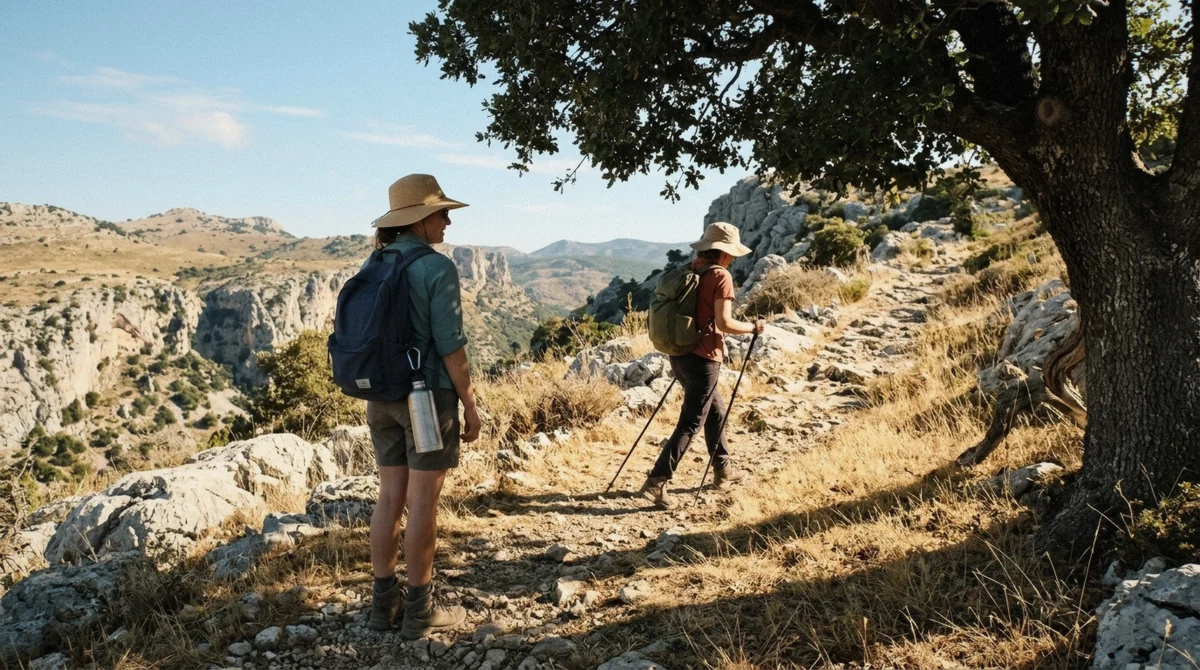
Hiking in Sardinia works in summer if you shift the whole day earlier: on the trail by seven, off it before the early afternoon, on a route with some shade or a coastal breeze. Nuoro's July and August average around 31°C, and the fire-danger period runs from 1 June to 31 October, so plan around both heat and dry vegetation, not just one.
Key takeaways
- Nuoro averages 31°C in July and August with about 12 mm of rain in July, the driest stretch of the year
- ARPA Sardegna recorded 47.8°C at Uta Santa Lucia on 17 July 2026, close to the all-time regional record
- A trailhead at 900 to 1,000 m in the Supramonte runs roughly 6°C cooler than the coast, real but not enough on its own
- The Health Ministry's guidance is to avoid outdoor effort between 11:00 and 18:00 in a heatwave
- Short, shaded or coastal walks still work well: the sunset hike to the Cagliari lighthouse starts in the evening and the Porto Conte trek near Alghero runs barely two and a half hours
- Fire danger runs 1 June to 31 October across 25 alert zones, and closures are announced case by case, never set by a blanket rule
Sardinia's Summer Climate, Month by Month
Nuoro sits inland at about 550 m and is the closest normal station to the Supramonte trailheads, so its long-term averages are the honest reference for anyone planning a summer trip. Treat these as typical figures, not a forecast, and check conditions close to your dates.
| Month | Avg low °C | Avg high °C | Rain mm |
|---|---|---|---|
| January | 3 | 11 | 75 |
| February | 2 | 12 | 65 |
| March | 4 | 14 | 60 |
| April | 6 | 17 | 75 |
| May | 9 | 22 | 50 |
| June | 13 | 28 | 30 |
| July | 15 | 31 | 12 |
| August | 16 | 31 | 15 |
| September | 13 | 25 | 45 |
| October | 11 | 21 | 60 |
| November | 7 | 15 | 115 |
| December | 4 | 12 | 100 |
July is the driest month of the year at Nuoro, with only about 12 mm of rain against an annual total of roughly 705 mm spread across 88 rainy days. August runs almost identical on temperature and slightly wetter. June is the honest shoulder month for anyone who can move their dates: five degrees cooler on the average high and still dry enough to trust.
These are long-term normals for Nuoro, cross-checked across published climate datasets, not a single station's raw readings, so treat any given week as capable of running hotter.
The Guided Days That Still Work in High Summer
These three are the ones we would actually book in July or August: short, with real shade or a sea breeze, and none of them ask you to be out on exposed limestone at midday.
 from $57
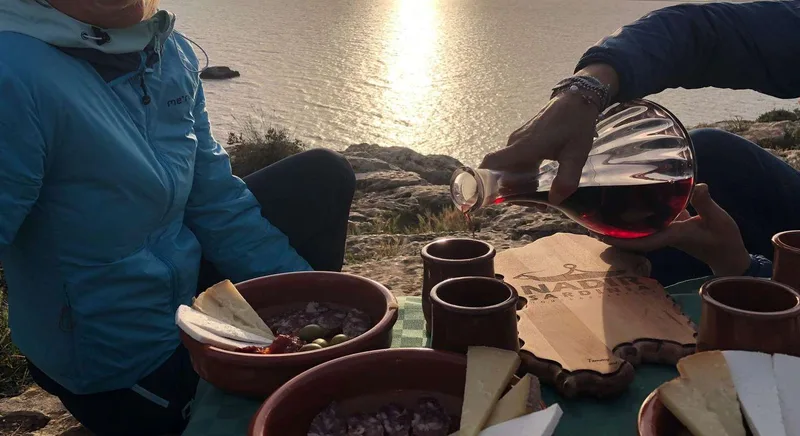
Cagliari: Sunset Hike to Lighthouse with Aperitif
Walk the 3 km coastal path above Cagliari at sunset, discovering WWII batteries, the Savoy fort of Sant'Ignazio, the Signal Tower, and the iconic Capo Sant'Elia lighthouse —…
- Sunset walk along the Capo Sant'Elia promontory above Cagliari
- WWII battery, Savoy fort & Signal Tower — rich history throughout
- Loved by English speakers — 100% perfect score from English-speaking travellers
- Sardinian aperitif with 2 glasses of local wine at the lighthouse
 from $68
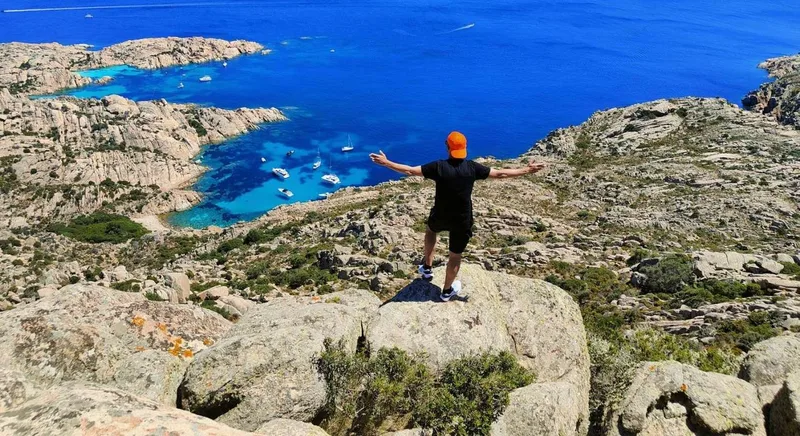
Trekking La Maddalena Archipelago — Caprera Island Hike to Cala Coticcio
The main trekking route in the La Maddalena Archipelago — hike through the pinkish granite landscapes of Caprera Island with a licensed National Park guide to reach Cala…
- La Maddalena Archipelago National Park — daily visitor numbers strictly limited
- Departs from La Maddalena area — Caprera Island via the causeway
- Snorkel in crystal-blue waters at Cala Coticcio — Sardinia's 'Tahiti'
- Park entrance ticket + Sardinian aperitif included
 from $81
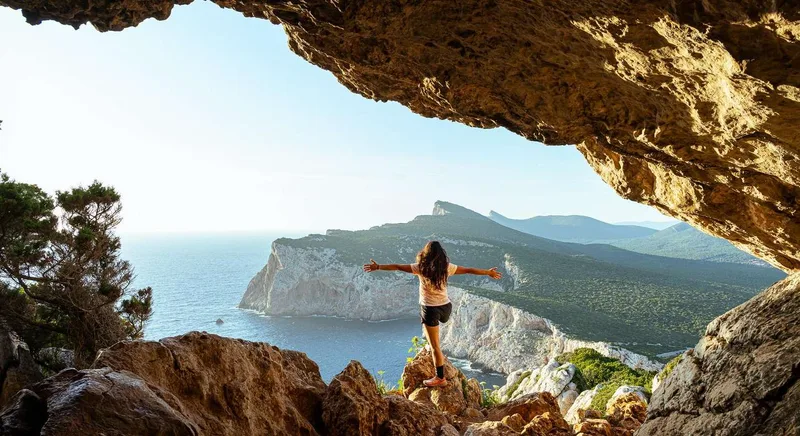
Alghero: Porto Conte Natural Park Trek with Aperitif
Follow a circular coastal trail through Porto Conte Natural Park from Cala Dragunara to the ancient Grotta dei Vasi Rotti, with breathtaking views of the Capo Caccia lighthouse…
- Circular coastal trek with views of Capo Caccia lighthouse & Foradada Island
- Visit the Grotta dei Vasi Rotti (Cave of Broken Pots)
- Environmental guide explains local flora, fauna & geology
- Small group — max 10 participants
How Hot It Really Gets
The numbers from the July 2026 heatwave are the clearest picture of what a bad week looks like. ARPA Sardegna, the regional environmental protection agency, recorded 47.8°C at Uta Santa Lucia on 17 July 2026, within half a degree of the all-time regional record of 48.2°C set at Jerzu and Lotzorai in July 2023. Between 14 and 17 July, 233 of the region's 308 weather stations, about 75 per cent, passed 40°C, and 53 stations passed 45°C. Nuoro itself, an inland town used to milder summers than the coast, reached 40°C on 19 July and 42°C on 21 July.
Altitude helps, but not as much as people assume. Air cools by roughly 0.6°C for every 100 m of elevation gained, so a trailhead at 900 to 1,000 m in the Supramonte runs about 6°C cooler than the coast on the same day. That is a real, useful difference on a merely hot day.
On a day like 17 July 2026, it is the gap between dangerous and very dangerous, not between hard and comfortable. Treat the 6°C figure as an approximation, not a guarantee, and plan the day around the hour rather than the altitude alone.
The Early-Start Rule
Italy's Ministero della Salute heat guidance is straightforward: avoid physical effort outdoors between 11:00 and 18:00 during a heatwave, and keep exertion to the early morning or after sunset. A national heat helpline, 1500, runs through the summer for anyone who needs it. On a Sardinian trail that translates into a simple rule: be walking by seven, and be back at the car or the pickup point well before the eleven o'clock line, not arriving at it.
This is exactly why the shorter guided days earn their place in summer. The Cagliari sunset walk to the lighthouse is built the other way around the clock, departing in the evening once the worst of the heat has broken, and the Porto Conte trek near Alghero runs inside a shaded park for two and a half hours rather than committing you to a full exposed day. If you are set on a longer canyon day in midsummer, ask about the earliest available start and plan to be well off the trail before midday, not merely underway.
- Start by 06:30 to 07:00 on any exposed route in July or August
- Treat 11:00 as the line you are back inside of, not the line you are still walking towards
- Evening departures, like the sunset lighthouse walk, sidestep the worst hours entirely
- A shaded, short walk beats a long exposed one on a heatwave day, regardless of how fit you are
Which Walks Still Work in July and August, and Which to Postpone
Duration and shade decide this table more than difficulty rating does. A short shaded walk in a park beats a long exposed canyon day every time in high summer.
| Walk | Duration | Summer verdict | Why |
|---|---|---|---|
| Cagliari sunset hike to the lighthouse (#tour-7) | 2.5 hours | Works well | Evening departure, after the heat has broken |
| Porto Conte trek near Alghero (#tour-9) | 2.5 hours | Works well | Short, largely inside a shaded natural park |
| Caprera hike to Cala Coticcio (#tour-1) | 7 hours | Works with an early start | Long, but ends with a snorkelling stop and sea breeze off the archipelago |
| Donkey walk in Cargeghe (#tour-3) | 3.5 hours | Works with an early start | Short enough to finish before the worst of the midday sun |
| Cala Gonone Gorropu hike (#tour-2) | 6 hours | Better postponed to September | Full midday exposure on open limestone, little shade |
| Orosei or Dorgali Gorropu hike (#tour-10) | 8 hours | Better postponed to September | The longest day here, most of it without shade |
| Tiscali nuragic village hike (#tour-8) | 8 hours | Better postponed to September | Steep, exposed approach with no reliable water on the trail |
| Capo Testa and Moon Valley coastal hike (#tour-11) | 6 to 7 hours | Works with an early start | Coastal, with sea breeze, but still a long day in full sun |
The pattern is simple once you see it: the two eight-hour canyon and cave days carry the least shade and the most sustained exposure, which is exactly what a 40°C afternoon punishes hardest. If your dates are fixed inside July or August and one of those two is the plan, ask for the earliest possible departure and be candid with yourself about how the heat will feel four or five hours in. The gorge itself, its ticket hours and access routes, are covered in full on our Gola su Gorropu guide.
Fire Season: Dates, the Daily Bulletin and What Actually Closes
Sardinia's period of high forest-fire danger runs from 1 June to 31 October, set for 2026 by the regional government's deliberation n. 28/56 of 4 June 2026, inside the region's 2026 to 2028 anti-fire plan. The dates can be extended or shortened if conditions demand it, so treat 1 June to 31 October as the default window rather than a fixed rule. The regional civil protection service publishes a daily fire-danger bulletin covering 25 alert zones with four levels, bassa, media, alta and estrema, issued each afternoon for the following day.
There is no standing rule that a given alert level automatically closes a trail. Restrictions and closures are announced case by case by the civil protection service and the Corpo Forestale, tied to specific areas and specific conditions, not to the calendar alone. If you are hiking during the fire-danger period, check the current bulletin for the zone you are walking in rather than assuming a green light because nothing has been announced.
Report a fire on 1515, the Corpo Forestale's dedicated number, or on the general emergency line 112.
- High fire-danger period: 1 June to 31 October, adjustable by the region
- Daily bulletin: 25 alert zones, four levels, issued each afternoon
- No blanket rule closes trails at any alert level; closures are announced case by case
- Report a fire: 1515 (Corpo Forestale) or 112
- The maestrale wind, strongest November to March, is what turns a small summer fire into a large one fast
Water: How Much and Where There Is None
Springs in the Supramonte and Gennargentu are route-specific and cannot be counted on in summer. No park or CAI statement promises reliable summer water across the network, so treat every trail as dry unless you have confirmed otherwise for that specific route. There is no official Italian figure for exactly how much to carry, but mountain-medicine and trekking sources converge on roughly two litres for a half day and three to four litres for a full hot day, drunk steadily rather than saved for the end.
A drinking-water point sits close to the entrance of the Gola su Gorropu, but the trails themselves carry none, and phone coverage inside the gorge is unreliable to non-existent. Full ticket, access and entry-point detail for Gorropu lives on our dedicated guide; the point here is simpler: whatever you carry in is what you have until you are back at the car. If a route on Sardinia's guided hiking calendar doesn't say otherwise, plan for it to be dry.
The Summer Day Pack
What to carry on a July or August walk
- Two to four litres of water depending on the length and exposure of the route
- A hat with real coverage and sunscreen reapplied through the day, not just at the start
- Light, breathable, loose clothing rather than tight technical layers
- A phone charged and loaded with an offline map before you start, since coverage drops in the gorges
- Salty snacks or electrolyte tablets for a full day in the heat
- Cash for any trail or park ticket paid on site, several accept cash only
- The emergency numbers 112 and 1515 saved or written down before you lose signal
Your Week Is in August, Now What
If your dates are fixed and you only have weekday evenings free
book the Cagliari sunset walk to the lighthouse. It is built for exactly this, departing after the day's heat has broken.
If you want a full day out but the calendar says August
take the Caprera hike to Cala Coticcio early. It runs long, but the sea breeze and the snorkelling stop at the end make the heat far more bearable than an inland canyon.
If Gorropu or Tiscali is the reason you booked this trip
ask for the earliest departure available, carry three to four litres of water, and be honest with yourself about turning back if the heat is worse than forecast.
If you can still move your dates
shift towards early June or late September. Both sit outside the worst of the heat while staying dry and within the fire-danger period's ordinary caution rather than its extreme end.
If you are travelling with children
read our hiking in Sardinia with kids guide first. Summer heat and a child's tolerance for a long exposed walk are a worse combination than for an adult.
Frequently Asked Questions
Is it too hot to hike in Sardinia in summer?
Not if you shift the day earlier and choose the right route. Nuoro averages 31°C in July and August, and a bad week like mid-July 2026 pushed several inland stations past 40°C. Short, shaded or evening walks such as the Cagliari sunset hike still work well; the long, fully exposed canyon days are better saved for September.
What time should you start a summer hike in Sardinia?
By 06:30 to 07:00 on any exposed route, aiming to be off the trail well before 11:00. The Italian Health Ministry's own heatwave guidance is to avoid outdoor effort between 11:00 and 18:00, and it applies as much to hikers as anyone else outdoors.
Are trails closed in Sardinia because of fire risk?
Not automatically. The high fire-danger period runs from 1 June to 31 October, with a daily bulletin covering 25 alert zones at four levels, but no alert level closes a trail on its own. Closures are announced case by case by the civil protection service and the Corpo Forestale for specific areas and conditions.
How much water do you need for a summer hike in Sardinia?
There is no official Italian figure, but guides commonly work to roughly two litres for a half day and three to four litres for a full hot day, drunk steadily. Springs across the Supramonte and Gennargentu are route-specific and should not be relied on in summer.
Which Sardinian hikes are best in August?
Short, shaded or coastal ones: the sunset walk to the Cagliari lighthouse, the Porto Conte trek near Alghero, and the Caprera hike to Cala Coticcio with its snorkelling stop and sea breeze. The full trail-by-trail comparison sits on our best hiking trails in Sardinia page.
When does the heat break in Sardinia?
September is the clear turning point: Nuoro's average high drops from 31°C to 25°C, and average rainfall climbs from July's 12 mm to about 45 mm. Late September into October is when the longer canyon and mountain walks stop being an endurance question and go back to being a straightforward hike.